Why You Should NEVER Hire a Powerwasher That Doesn't Ask About Your Siding Warranty
Most vinyl siding manufacturers — CertainTeed, Mastic, Norandex — explicitly void coverage for high-pressure cleaning damage. Here's the warranty language, the questions to ask, and how a careful crew protects 30-year coverage.
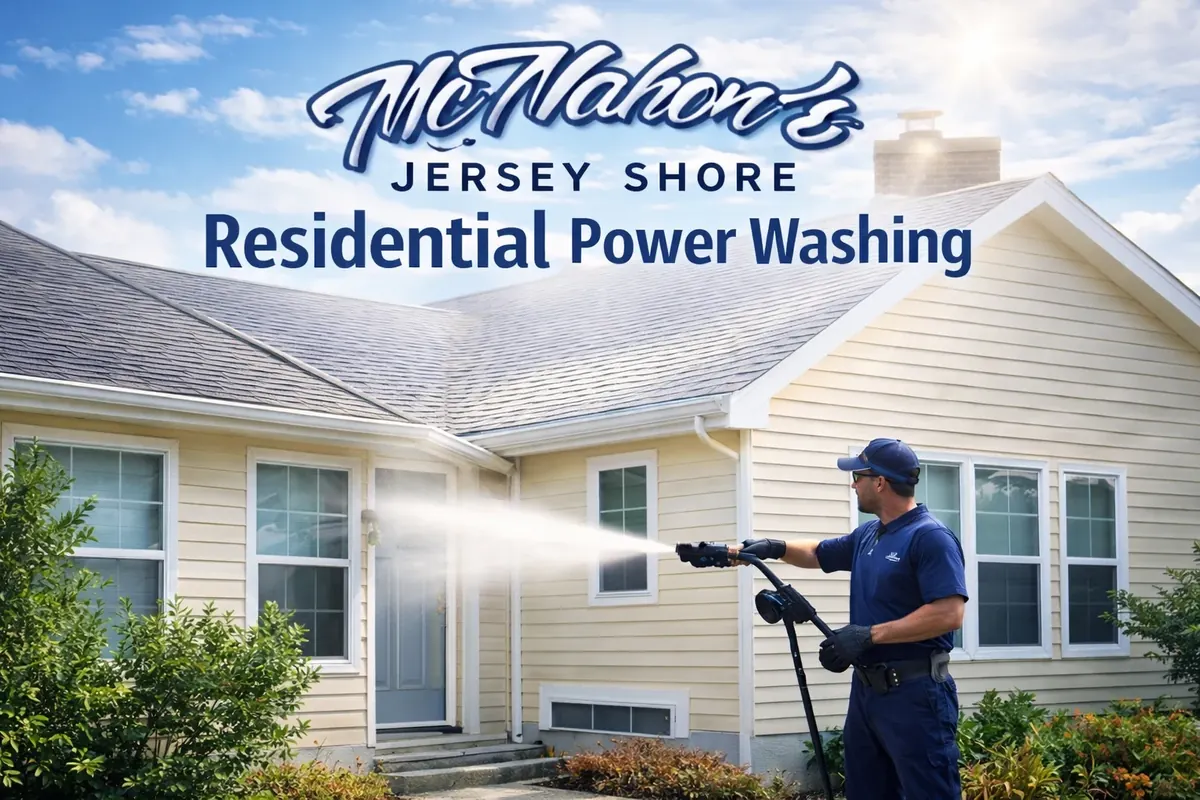
A 30-year vinyl siding warranty is worth thousands of dollars over the life of a Jersey Shore home. A single high-pressure pass can void it in about four minutes. Every major vinyl siding manufacturer — CertainTeed, Mastic Home Exteriors, Norandex, Royal Building Products, Ply Gem — publishes warranty language that excludes damage caused by “high-pressure cleaning” or “improper cleaning methods.” If the powerwasher pulling into your driveway has not asked about your siding warranty before he writes the quote, he is not a careful pro. He is a liability, and you are the one holding it.
This is the post we wish every Point Pleasant Beach, Brick, Manasquan, and Toms River homeowner read before they hired the cheapest guy in a Google ad.
Quick Answer
Most major vinyl siding manufacturers (CertainTeed, Mastic, Norandex, Royal, Ply Gem) explicitly void warranty coverage for damage caused by high-pressure cleaning, abrasive cleaners, or chemicals not approved by the Vinyl Siding Institute (VSI). VSI’s published cleaning guidelines recommend a soft-bristle brush, mild detergent, and a garden hose — not a 3,000 PSI pressure washer. A 30-year color, fade, and hail warranty can be voided by a single pressure-wash pass that drives water behind the panels, etches the finish, or strips the embossed pattern. Before hiring any contractor, ask three questions: (1) what’s your max PSI on vinyl? (2) what chemistry do you use? (3) will you put the proof of insurance? Any answer above 500 PSI on vinyl, or any reluctance to send a certificate of insurance, is a hard no. A careful soft-wash crew applies cleaner at under 500 PSI — about garden-hose pressure — and lets chemistry do the work. That method is the only one VSI and the major manufacturers approve.
What the Manufacturer Warranties Actually Say
We’ve read these documents word-for-word because we have to. The exact language varies by brand and warranty year, but the substance is consistent across the industry:
CertainTeed (one of the top 3 US vinyl siding manufacturers) — their lifetime limited warranty excludes damage resulting from “improper installation, cleaning, or maintenance,” and their published cleaning guide specifies a soft cloth or soft-bristle brush with mild detergent solution. No pressure washer is referenced as approved. Pressure washing is not on the list of acceptable methods.
Mastic Home Exteriors (Ply Gem brand) — Mastic’s lifetime warranty similarly excludes damage from “abrasive cleaners, harsh chemicals, or high-pressure water cleaning equipment.” Their care guide explicitly recommends a garden hose with a long-handled brush — not a pressure rig.
Norandex — Norandex’s warranty language voids coverage for damage caused by “improper cleaning techniques, including but not limited to high-pressure water cleaning.” Their consumer-facing cleaning guidance recommends a gentle hose rinse with detergent.
Royal Building Products / Ply Gem — both Royal and Ply Gem brands carry similar exclusions. Their parent-company maintenance guidance routes back to the Vinyl Siding Institute’s cleaning guidelines, which is the industry-wide reference document. That document is unambiguous: low pressure, mild cleaner, soft brush, garden-hose rinse.
The pattern across every major manufacturer is the same. High pressure is not in the approved-methods list. The warranty document is written to exclude it.
What High Pressure Actually Does to Vinyl
Vinyl siding looks tough. It’s not — not against a 3,000 PSI fan tip held two inches from the surface. Here’s what we see when we get called in to look at a botched job:
| Damage Mode | What It Looks Like | Why It Voids the Warranty |
|---|---|---|
| Lap-mark etching | Visible horizontal streaks where the wand was held too close | Permanent surface damage; not a covered fade or weather event |
| Embossed pattern loss | The wood-grain texture is smoothed out in a stripe | Manufacturing finish is altered; not a covered material defect |
| Water intrusion behind panels | Bubbling paint or rot on sheathing 12 months later | Damage caused by improper cleaning, explicitly excluded |
| Seam blow-out | Panels separated at the lock joint | Installation integrity compromised by user action |
| Chalking acceleration | Premature white powdery surface | Cleaning method outside approved care guide |
The lap-mark etching and embossed-pattern loss are the ones we see most often. They show up immediately, they’re permanent, and once the manufacturer’s regional rep looks at the failure, the coverage is gone. The homeowner is left holding a $15,000–$30,000 replacement bill on what should have been covered material.
We document this every time we encounter it — photos, the failing surface, side-by-side comparison with untouched elevation. The same pattern appears whether the original wash was done by a chain franchise, a one-truck side-hustler with a Harbor Freight rig, or a landscaper who “also does powerwashing.” High pressure on vinyl is the issue, not the brand of the contractor.
How Soft-Wash Keeps the Warranty Intact
The right method for vinyl is soft-wash — cleaner does the work, not the pressure. Specifically:
- Pressure under 500 PSI at the surface — about garden-hose pressure. Our soft-wash pump delivers chemistry at 60–500 PSI through a dedicated low-pressure tip. We don’t even bring the high-pressure rig within range of vinyl.
- Sodium-hypochlorite plus surfactant at 0.5–1.5% dilution — the active chemistry that kills mildew, algae, and gloeocapsa magma. Biodegradable, breaks down on contact with water.
- 5–15 minute dwell time — the cleaner sits, does its biological kill, and then is rinsed.
- Pre-rinse and post-rinse of landscaping — neutralizes any over-spray on plants below the gutter line.
- Clean-water rinse pass — removes the now-dead biological growth and any residual cleaner.
That sequence is what the Vinyl Siding Institute’s cleaning guidelines describe as the recommended approach. It’s what we do on every house we touch. The warranty stays intact. The siding looks like new. The homeowner doesn’t end up in a coverage dispute when something fails three years later.
We have written this method into our house soft-wash service description — it’s not an upcharge or a “premium” option. It’s the only method we use on siding. Anyone who’s offering you a “powerwash” on vinyl at 2,500+ PSI is offering you a different product than what we’re talking about here.
Five Questions to Ask Before You Hire
Print these. Read them off the page when the contractor walks the property. The right answers are short and specific. Any vague or evasive answer is a signal.
-
“What’s your maximum PSI when you’re working on vinyl siding?”
- Right answer: Under 500 PSI, soft-wash only. Chemistry does the work.
- Wrong answer: “Whatever it takes” / “1,500–2,500 PSI” / a long explanation of how he can “control” high pressure.
-
“What’s the chemistry — what’s in the tank?”
- Right answer: Sodium hypochlorite plus a surfactant, diluted 0.5–1.5%, biodegradable, breaks down with water.
- Wrong answer: “Just bleach and water” / “It’s a proprietary mix, I can’t tell you” / “Eco-friendly soap” with no specifics.
-
“Do you carry $2M general liability insurance, and can I get a Certificate of Insurance?”
- Right answer: Yes, COI issued to your address before the job starts.
- Wrong answer: “I’m covered, don’t worry” / produces nothing in writing / quotes a $500K policy.
-
“Will you put a proof of insurance on the quote?”
- Right answer: Yes, every quote includes it. Here’s the language.
- Wrong answer: “We’ve never damaged anything, we don’t need that” / verbal promise only.
-
“Are you familiar with the CertainTeed, Mastic, or VSI cleaning guidelines?”
- Right answer: Specific reference to the documents and the soft-wash method.
- Wrong answer: “Never heard of them” / “Manufacturers say all kinds of things, doesn’t matter in practice.”
If you get three or more wrong answers from the list above, walk. There is no price below which an uninsured high-pressure crew is a deal — the math on saving $150 to risk a $20,000 siding replacement plus warranty loss doesn’t work.
How We Walk a Job Before We Quote
Every quote we write at McMahons starts with a walk — that’s not a sales tactic, it’s a warranty-protection step. Here’s what the walk actually covers:
- Substrate identification. Vinyl, cedar shake, Hardie, painted wood, stucco, EIFS — each one wants different chemistry and different rinse pressure. We won’t quote a “house wash” without knowing what we’re cleaning.
- Warranty-sensitive features. Window seal lines, gutter caulk, exterior caulk at door frames, deck rail mounts, dryer vents. All of those want a careful pass, not a flood-rinse.
- Plant inventory. Azaleas, hydrangeas, hostas, and boxwoods all sit in our pre-rinse priority list. So do new-plant beds within 5 feet of the foundation.
- Roof tie-in. If we’re doing the roof soft-wash the same day, we sequence roof first, siding second, to avoid re-fouling.
- Owner concerns. Anything visible during the walk that the homeowner wants noted before we touch it. Photographed, written into the scope.
We do this walk on every job because documenting what was already loose, cracked or rotted before we start is the only way a dispute afterwards has a factual answer. It protects you as much as us.
The Short Version
Every major vinyl siding manufacturer voids the warranty for damage caused by high-pressure cleaning. The Vinyl Siding Institute’s published cleaning guidelines specify soft-wash methods, mild detergent, and garden-hose pressure. A contractor who doesn’t know that — or who knows it and quotes high-pressure work anyway — is putting your 30-year coverage at risk to save 20 minutes of labor. Ask the five questions above. Read the answers carefully. If you’re not sure what’s on your house, send us a photo and we’ll tell you the substrate and the right method — for free, before anyone writes a quote. The walk is the work, and a careful walk is what keeps your warranty alive.
More from the field.
Is Powerwashing Safe for Plants and Pets? A Jersey Shore Pro Explains
A careful soft-wash is safe for landscaping and pets when the crew follows the right pre-rinse, dilution, and post-rinse protocol. Here's the chemistry, the plant categories that need protection, and the pet protocol we use on every job.
How Long Does a Soft-Wash Last? (And What Affects It)
A soft-wash on Jersey Shore vinyl siding typically lasts 12-24 months. Here's what shortens it (north-facing walls, tree cover, salt air), what extends it (full sun, clean gutters), and the recurring schedule we recommend.
Send us a photo.
If something on your house looks like what we wrote about, send a phone photo. We'll tell you what method is right, give a ballpark price, and book a walkthrough.
- Mon–Fri 7:00 AM – 7:00 PM
- Sat 8:00 AM – 4:00 PM
- Sun By appointment